2C Hair
If you have 2C hair, you already know it doesn’t follow rules. Your texture lives in the middle ground. It’s not straight, and it’s not fully curly either. On good days, your hair forms strong S-shaped waves with natural volume. On rough days, it turns frizzy, puffy, or loses its shape too fast.
I’ve worked with wavy hair types for years, and 2C hair is often misunderstood. Many people treat it like straight hair and wonder why it frizzes. Others overload it with heavy curl creams and end up with flat roots. Neither approach works long long-terms guide is built differently.
Here, I’ll explain how to style 2C hair, how it compares to other textures, the best products for 2C hair, and a realistic 2C hair routine for frizz that fits real life. Everything stays focused on your main texture. No extra material. No distractions.
The Magic of 2C Waves
2C hair has character. It’s bold, textured, and full of movement. The waves usually start near the roots and continue down the length, creating depth and volume without much effort.
Still, many people with 2C hair struggle daily. The most common issues include:
- Frizz that shows up randomly
- Waves that collapse by midday
- Dry ends with oily roots
- Products that feel either too heavy or too weak
The issue is not your hair type. It’s the routine behind it.
2C hair needs balance. It needs moisture without weight. Hold without stiffness. Once you understand this balance, your waves start behaving in a predictablys article walks you through that process step by step.
Identifying Your Pattern: Is It Really 2C Hair?
Before changing your routine, you need to confirm your texture.
What Defines 2C Hair?
2C hair forms strong S-shaped waves that are visible even when wet. The texture often feels thick or coarse. Volume comes naturally, especially around the crown.
Typical signs include:
- Waves that start close to the scalp
- A tendency to frizz without moisture
- Loose curls forming at the ends
- High reaction to humidity
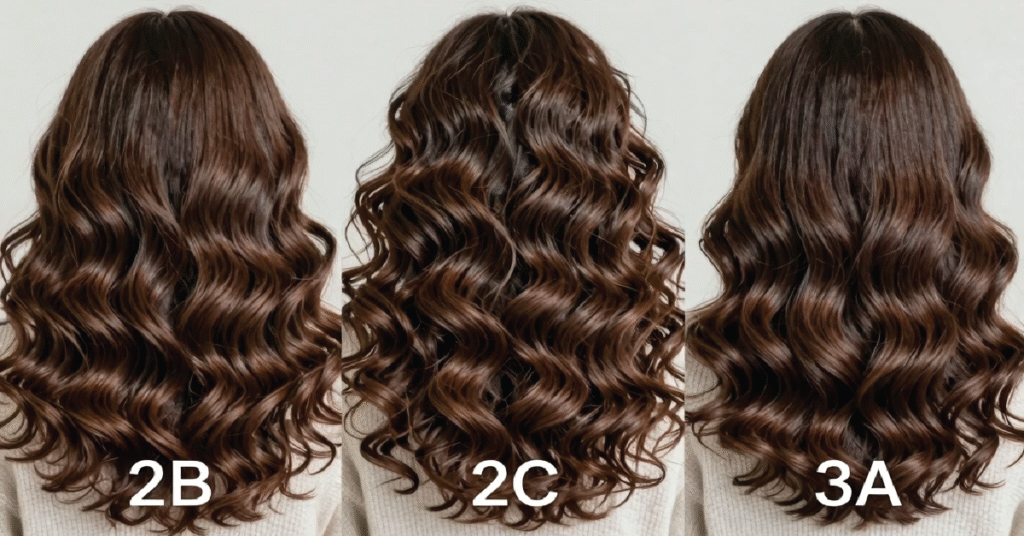
2C Hair vs 2B Hair
2B hair usually has flatter roots and looser waves. It often needs styling help to show shape. 2C hair, on the other hand, waves on its own and holds texture more easily.
2C Hair vs 3A Hair
This is where most confusion happens.
- 2C hair vs 3A hair:
3A hair forms spiral or corkscrew curls. 2C hair stays in wave territory. Even when defined, the pattern looks like repeated “S” shapes rather than loops.
If your hair never forms full ringlets naturally, it’s likely 2C.
The Foundation: A Practical 2C Hair Care Routine
A good routine protects hair cuticle health, supports moisture retention, and helps waves last longer.
Wash Day Essentials
Always start with a sulfate-free shampoo. Sulfates strip natural oils, and 2C hair relies on those oils to stay smooth and flexible.
Wash frequency depends on your scalp:
- Oily scalp: 2–3 times per week
- Dry or normal scalp: 1–2 times per week
Apply shampoo mainly to the scalp. Let the foam rinse through the lengths.
Conditioning the Right Way
Conditioning is non-negotiable for 2C hair.
After applying conditioner, add water and scrunch upward. This method helps push moisture into the hair shaft and improves wave formation.
Detangling Rules
Never detangle dry 2C hair. Always detangle when wet and coated with conditioner. Use a wide-tooth comb or your fingers.
Dry detangling breaks wave clumps and increases frizz.
Moisture–Protein Balance
2C hair reacts quickly when this balance is off.
- Too much protein leads to stiffness and breakage
- Too much moisture causes limp, undefined waves
If your hair feels rough, add moisture. If it feels overly soft and flat, reduce heavy masks.
Professional Styling Techniques for Definition
Styling decides how long your waves last.
Product Application Methods
Two techniques work best for 2C hair:
- Praying hands method: Smooth product over wet hair to reduce frizz
- Scrunching: Lift hair upward to encourage wave formation
Start with smoothing. Finish with scrunching.
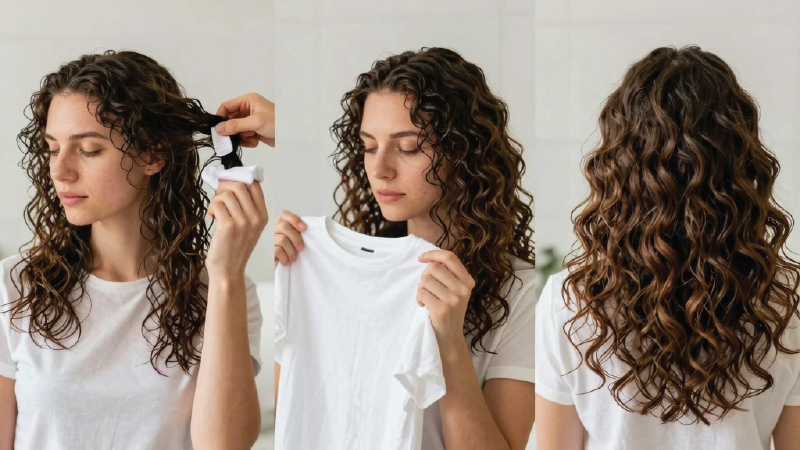
Plopping for Better Shape
Plopping helps waves set without gravity pulling them down.
Basic steps:
- Place a microfiber towel or cotton T-shirt on a flat surface
- Lower hair into the center
- Wrap gently
- Leave for 15–25 minutes
This improves definition and reduces frizz.
Drying: Air Dry vs Diffusing
Air drying
- Gentle and low damage
- Can increase frizz and reduce volume
Diffusing
- Offers better control
- Helps maintain shape and lift
Use low heat and low airflow to avoid disrupting the wave pattern.
Breaking the Cast
Many styling products form a crunchy cast as hair dries. This is a good sign.
Once hair is fully dry:
- Rub a small amount of lightweight oil between your palms
- Scrunch gently
This softens the cast and leaves it bouncy and natural.
The 2C Product Toolkit
The best products for 2C hair are lightweight and flexible.
Shampoos
Choose formulas that:
- Are sulfate-free
- Clean without stripping
Use a clarifying shampoo occasionally to remove buildup.
Styling Products
Mousses and foams usually work better than heavy creams for 2C hair.
They help with:
- Defined curls
- Faster drying
- Less greasy buildup
Oils and Sealants
Finish with a few drops of lightweight oil, such as jojoba or argan. These help seal moisture and add shine without heaviness.
Troubleshooting Common 2C Hair Problems
Constant Frizz
Frizz often comes from dryness and friction.
Fix it by:
- Avoiding rough towels
- Applying products to soaking-wet hair
- Sealing with a light oil
This forms the core of any strong 2C hair routine for frizz.
Waves Falling Flat
If your waves lose shape quickly, your products may be too heavy. Reduce creams and try lighter stylers.
Flat Roots
Root clipping during drying helps add lift at the crown. Remove clips once hair is fully dry.
Maintenance: Day 2, Day 3, and Beyond
Healthy waves don’t end on wash day.
Refreshing Waves
Use a spray bottle with water and a small amount of leave-in conditioner. Lightly mist and scrunch.
Protecting Hair at Night
Sleep habits matter.
- Use a silk or satin pillowcase.
- Try a loose pineapple ponytail
Bot.h reduces friction and helps waves last longer.
FAQs
Can I brush 2C hair?
Yes, but only when it’s wet and conditioned.
How often should I wash 2C hair?
Most people do best washing one to three times per week.
Is 2C hair considered curly?
It sits between wavy and curly. Structurally, it’s wavy with strong definition.
Final Thought
2C hair doesn’t need control. It needs the right support.
Once you stop fighting your texture and start working with it, your routine becomes easier. Frizz reduces. Definition lasts longer. Styling stops feeling stressful.
Start with one change. Adjust slowly. Respect the balance your hair needs.
That’s how 2C hair becomes consistent, confident, and easy to manage, every single day.